Diet Soap Podcast #142: The Production of Space

The guest this week is the blogger, artist, philosopher and musician Jon Meade and we discuss how Henri Lefebvre’s book The Production of Space is significant reading in this Late Capitalist moment.

However, this episode is also an audio collage. It starts with a conversation with my son Benjamin about The Production of Space in video games, moves from there to a conversation with Ben, Simon and Noah (my three sons) about Jim Henson’s experimental television program The Cube, and only then does Jon Meade starts to pipe in as well. This episode is a mash up and you can find it here.

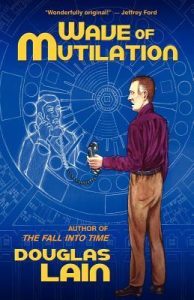
I want to thank Jason H and Daniel L for donating to the podcast and let you both know that copies of my book, Wave of Mutilation, will be in the mail very soon. Jason H has already been waiting for over a week. I welcome donations, and subscribing to the podcast will also make you a member of the Diet Soap Philosophy Workshop. Right now there are 16 members of the workshop, although attendance varies. I would certainly welcome four or even five more people aboard, and we’re not too far into the Phenomenology of Spirit yet so you could all probably catch up pretty quickly.

I should point out that I’ve started blogging over at my own website again, over at douglaslain.com, and that I’ll be blogging for Tor.com again in the weeks to come. You can find my Facebook page, I’m the douglaslain in Portland Oregon, follow me on twitter my handle is douglain (and that’s L A I N), find me on linked in, check out my dormant Google plus account, see one or two pictures I posted on Instagram, StumbleUpon me, or just send me an email to tell me what a Netlog is.

Again, the guest this week is Jon Meade, however along with Meade you’ll hear a clip of singer Eli Mattson performing his own unique cover version of the song My Favorite Things, that’s at the 38 minute mark.


Essay on Henri Lefebvre from Thought Catalog:

Henri Lefebvre’s 1974 book The Production of Space argues against the concept of empty or geometric space and in favor of social space. He was a committed Marxist and his idea that space is never truly empty but always filled in or mediated is perhaps just a philosophical refinement of the argument against neutrality or objectivity. Howard Zinn often commented that “one can never be neutral on a moving train” and by this he meant that he, as an historian, could never be objective but was always implicated in the struggle that is history. Lefebvre went a step beyond this observation by suggesting that reality or space itself was bound up in the same historical struggle. Lefebvre’s book argued against the objective world but did not posit a relative of subjective world in its place. What Lefebvre was seeking was a way to conceive of space itself as Howard Zinn.

The back cover blurb for his book explains his project this way:

The production of space is a search for a reconciliation between mental space (the space of the philosophers) and real space (the physical and social spheres in which we all live).

To get a firm grip on what Lefebvre was attempting is to risk depoliticizing his work. We have to consider his work from within the realm metaphysics and to consider his argument within this realm risks reestablishing the dominance of the very “mental space” that Lefebvre is attempting to transcend. Still, if we are to understand his ideas rather than hold to them in a vulgar act of politics then we must risk what might be considered a move toward idealism.

[Read More at Thought Catalog]

Share and Enjoy:
  • StumbleUpon
  • Facebook
  • Twitter
11 May 2012, 6:22pm
Essay
by

leave a comment

Notes toward a Blog Post: Star Trek, Lefebvre, and The Cage


My goal for my next blog post on Star Trek will be to establish that the program is both an example of an Althusserian Ideological State Apparatus and a kind of Lefebvrian Representational Space. I also want to demonstrate how Star Trek is a means to understand these theoretical abstractions. I’ll want to explain how it could be that Star Trek is both ideological in so much as it reproduces the ruling ideology of its time while being self-reflexive, or how it is that the ruling ideology not only includes a critique of itself but how these abstractions can be shown to be concrete because they are generated by or contained within ISAs or representational spaces. I may have to turn to Hegelian dialectic or the cheat of producing the affect of dissolution with yet another moment where I write about what a snake thinks about when eating his own tail. What I’d rather do, however, is end up seducing and then convincing the reader of the concreteness of the abstractions I find by courting the reader’s own desire.

Share and Enjoy:
  • StumbleUpon
  • Facebook
  • Twitter
9 May 2012, 5:50pm
Essay
by

leave a comment

Star Trek as The Sign

Yesterday I posted about how Star Trek can best be understood through Star Trek. That is, while it is tempting to set about deconstructing the series, to take it apart and examine each piece of it using various theoretical critical tools that we might have at our disposal (for instance we might turn to Freud or Marx and apply their thought to any given episode or film in the franchise) the better approach is a more passive or receptive approach. Rather than impose various ideas onto Kirk or Picard, rather than place a grid over the Enterprise or on Vulcan in order to dissect the program, we should instead turn to the program itself and simply observe what we find there without the hope that any true understanding will be immediately revealed, but rather just so that we can see what the phenomena of Star Trek is and what happens on the show.

Yesterday I suggested that we could be assured that it was Star Trek and not Doctor Who that was the true television show. I said that Star Trek unfolded through history and ultimately divulged real understanding, but I gave no real basis for this assertion other than a circular argument about how Spock never had to borrow Doctor Who’s TARDIS and could time travel on his own.

The truth is, however, is that Star Trek is merely another television show like all the others. It came onto the scene, appearing on our TV sets for the first time on September 8th, 1966.

Still, this observation is significant in itself and maybe gets us closer to Understanding. If Star Trek was a television show, that means it was made up of images and sounds that presented themselves to a television audience. It appeared as a television spectacle in a culture wherein these spectacles were common. Star Trek appeared, as the philosopher Rick Roderick once said, inside a culture based on spectacle and images.

“And a culture based on spectacle and images has a peculiar non-systematic character. It’s like the Fall TV schedule. All you really know about it, right, is that it is going to appear on a kind of grid. But culture in general, we are not even sure about the grid let alone, you know, which dumb new sitcom goes in it, but we are not sure about the grid.
So, when you discuss cultural phenomena today, you almost have to go phenomena by phenomena to see how they fit.” -Rick Roderick, Philosophy and Post-Modern Culture, The Teaching Company, 1990

The grid that Roderick is referring to is the TV schedule, sure, but it is also a system of hierarchy and privilege, a means of establishing significance, and as we start to watch Star Trek the first thing we notice is that this system isn’t working very well. Sure, we can open our TV Guide and see that Star Trek is up against The Tammy Grimes show, but we can’t tell just by looking at the grid which show it is that we should watch or anything else of importance. So in order to figure out what to watch, in order to know what is significant for us in our lives, we have to just go through the schedule show by show. And, in order to understand what’s significant about any given show, even to understand how we understand what’s significant about a show, or how it is that a television show could be significant, we have to turn the television on and start to watch.

Share and Enjoy:
  • StumbleUpon
  • Facebook
  • Twitter
8 May 2012, 6:53pm
Essay
by

1 comment

How to Understand Star Trek through Star Trek

Many years back I purchased a book about Doctor Who entitled “Doctor Who the Unfolding Text,” a work of cultural studies written by John Tulloch which examines the BBC series from multiple points of view and using various theoretical approaches in order to expose the mechanisms and ideas, the meanings and symbols, that emerged from the series over its then twenty year history. This approach to the Doctor treats him as a contingent artifact of an historical process without arriving at any stance on what that historical process was and what IT might mean.

An Amazon review of the book explains the problem:

Tulloch and Alvarado set out to demonstrate that ‘Doctor Who’ is a series which gradually ‘unfolds’, growing in sophistication and laying bare its inner workings. They also claim that it does so in stages corresponding to different eras in the show’s ‘production history.’ Their main problem is that in order to establish [this] it is necessary to examine these different eras according to the same criteria – otherwise the comparisons are as meaningless as comparing the *color* of an orange with the *shape* of a banana. But this book examines each era according to a different theoretical model.

Here’s the problem taken from a different perspective. In order for Tulloch to treat Doctor Who empirically or as an object on its own he has to be willing to change his theory based on what he finds in the text. However, it isn’t enough to look around for the prefabricated theory that seems to cast some light on the science fiction, but rather, if it’s true that Doctor Who unfolded through its history creating greater and and more complex meanings as it progressed, then rather than applying theories to the show one should be able to use the show in order to develop and refine, perhaps even to negate or invalidate, one’s theories.

Now, it turns out that Doctor Who did not unfold through history creating greater and greater meanings as it progressed, but rather the science fiction series that accomplished this feat was Gene Roddenberry’s Star Trek. One way we can know this is by turning to Star Trek for verification. Does the Doctor ever appear on the show? When the characters on Star Trek time travel do they need to borrow the TARDIS? Is there a single episode wherein Leonard Nimoy is reduced to asking to borrow Tom Baker’s key? No.

The significance of Star Trek can be discerned simply. Just watch the show, all of the shows, in sequence, every day. That is perhaps the best way to Understand. However, I’ll also be writing here with some various observations to help you out along the way.

Tomorrow I’ll be explaining a bit more about how to Understand the show and how the show explains itself, and after that we’ll take a look at what the major themes of Star Trek really are.

For now, Live Long and Prosper for thine is the Enterprise and the Strange New World, Amen.

Share and Enjoy:
  • StumbleUpon
  • Facebook
  • Twitter
  • Support the Diet Soap philosophy podcast


    US donors who give $6 or more to the podcast will receive a copy of Douglas Lain's memoir "Pick Your Battle" or a copy of his novella "Wave of Mutilation." Donations of $15 or more from outside the US are also eligible.
    The best way to support the Diet Soap podcast is to subscribe to the Diet Soap Philosophy Workshop.
  • RSS Diet Soap Podcast

  • Get Diet Soap Email Updates!

    Type your email address below:

    Delivered by FeedBurner